
Residential Painting Services in Ottawa Boost Home Value Style and Curb Appeal

A fresh coat of paint can make a home feel cleaner, brighter, and better cared for in a matter of days. In Ottawa, where homes face icy winters, humid summers, spring pollen, and plenty of freeze-thaw cycles, paint does more than improve appearance. It protects surfaces, sharpens curb appeal, and helps a property feel current without a major renovation.
Professional residential painting services in Ottawa can be especially valuable because local homes vary so widely. A red-brick house in the Glebe, a newer build in Barrhaven, a century home near Centretown, and a townhome in Kanata may all need different preparation, products, colours, and finishes. Good painting is part design choice, part surface protection, and part skilled trade.

Why professional painting changes the way a home feels
Paint is one of the first things people notice in a home, even when they do not realize it. A chipped front door, uneven trim, scuffed hallway, or faded siding can make the whole property feel tired. Clean lines and well-chosen colours do the opposite. They make rooms look intentional.
Professional painters bring consistency to the work. That includes smooth wall coverage, sharp edges, proper product selection, and careful preparation. These details matter because paint highlights the surface underneath it. If drywall dents, peeling caulking, or stains are ignored, the finished room may still look unfinished.
A professional approach also helps avoid common problems:
Patchy sheen
Uneven rolling or poor primer use can leave shiny and dull spots across the same wall.
Bleed-through
Wood tannins, water stains, and old dark colours can show through if the right primer is skipped.
Peeling paint
Poor adhesion often starts with dust, moisture, glossy surfaces, or old failing coatings.
Messy trim lines
Wavy edges around ceilings, baseboards, and doors can distract from an otherwise beautiful colour.
Interior painting also affects how a home feels day to day. Light colours can make narrow hallways feel more open. A deeper dining room shade can create warmth in winter. A soft, washable finish in a busy entryway can make family life easier to manage.
Exterior painting has a different role. It protects wood, trim, doors, siding, railings, and other surfaces from moisture and sun. In Ottawa’s climate, exterior paint and stain need to handle expansion, contraction, snow, rain, and UV exposure. A pretty colour matters, but durability matters just as much.
Paint can support home value and curb appeal
A well-painted home signals care. That matters whether a homeowner plans to sell soon or stay for years. Buyers often respond to homes that feel clean, maintained, and move-in ready. Paint will not fix every issue, but it can remove visual distractions that make a property feel older than it is.
For sellers, fresh paint can help photographs look brighter and more polished. Neutral, well-applied paint helps rooms feel larger and easier to imagine furnished in different ways. For homeowners staying put, paint can create a similar benefit without the pressure of resale. It provides an affordable way to refresh a space after years of daily wear.
Curb appeal is especially important in Ottawa neighbourhoods where exterior character varies from street to street. A refreshed front door, painted porch trim, updated shutters, or crisp garage door can change the look of a home from the sidewalk. These smaller exterior projects can be powerful when the siding or brick is still in good condition.
A successful paint project does not just add colour. It makes a home look maintained, cohesive, and ready for the next season.
Exterior details that often make the biggest visual difference include:
Front doors and sidelights
Porch columns and railings
Fascia, soffits, and trim
Garage doors
Window frames and shutters
Decks, fences, and garden structures
For interiors, the strongest value often comes from high-traffic spaces. Entryways, stairwells, kitchens, living rooms, and bathrooms tend to show wear first. Refreshing these areas can make the whole home feel newer.

Ottawa colour trends favour warmth, contrast, and natural character
Ottawa homeowners often balance classic Canadian style with practical choices that suit long winters and changing light. The city’s natural seasons influence colour more than many people expect. A grey that feels calm in a sunny showroom can feel cold during a cloudy February afternoon. A warm white might feel inviting through winter, then still look clean and fresh in summer.
Popular local directions include warm neutrals, nature-inspired tones, and higher-contrast exterior details.
Warm whites and soft neutrals are replacing cold greys
Cool greys had a long run, but many homeowners now prefer warmer whites, creams, taupes, and greige tones. These colours pair well with hardwood floors, stone fireplaces, red brick, and black hardware. They also help rooms feel softer during Ottawa’s darker months.
Good options for a main living area often include:
Warm white for a clean, flexible backdrop
Greige for depth without heaviness
Soft taupe for older homes with wood trim
Pale mushroom tones for a calm, modern look
The key is undertone. Some whites lean yellow, some lean pink, some lean blue, and some lean green. Testing samples on several walls is worth the effort because Ottawa homes can have very different natural light depending on window direction and tree cover.
Greens, blues, and earthy colours bring the outside in
Sage, olive, muted blue, clay, and warm beige work well in bedrooms, dens, powder rooms, and dining areas. These colours feel grounded without being too dark. They also connect well with Ottawa’s mix of river views, parkland, mature trees, and stone architecture.
A deep green office or navy powder room can feel rich and tailored. A pale sage bedroom can feel restful. A clay or terracotta accent can warm up a space that has white walls and light flooring.
Exteriors are leaning toward contrast
Many Ottawa exteriors still feature brick, stone, vinyl siding, or stucco. Rather than repainting everything, homeowners often update the contrast points. Charcoal doors, black railings, creamy trim, and natural wood accents can make an older façade feel current.
Popular exterior combinations include:
Red brick with warm white trim and a black or deep green door
Light siding with charcoal trim and natural wood details
Stone accents with taupe siding and black hardware
White or cream exterior elements with a navy front door
The best exterior palette respects the fixed materials. Brick, stone, roofing, and windows all have undertones. Paint should work with them, not fight them.
Choosing the right colours starts with light, flow, and purpose
Choosing paint from a small chip is difficult. Colour changes with light, surrounding materials, furniture, flooring, and time of day. A shade that looks perfect under store lighting can look completely different beside oak floors or a north-facing window.
Start with the room’s purpose. A family room may need warmth and durability. A bedroom may need softness. A kitchen may need a colour that works with cabinets, counters, tile, and appliances. A front entry may need a welcoming colour that hides marks and stands up to salt, boots, and bags.
Use this simple process before committing:
Look at fixed elements
Flooring, counters, brick, tile, fireplace stone, and cabinetry should guide the palette.
Test large samples
Paint sample boards or sections of the wall. Check them in morning, afternoon, and evening light.
Compare undertones
Hold samples beside trim, flooring, and furniture. Watch for unwanted yellow, blue, pink, or green casts.
Plan the whole main floor
Open-concept homes need colours that flow. Rooms do not need to match, but they should relate.
Limit strong accent colours
Bold shades work best when used with intent, such as on a front door, powder room, built-in shelving, or feature wall.
For exteriors, test colour in shade and sun. Exterior colours often look lighter outdoors than expected because of natural light. A colour that seems deep on a chip may look much softer once painted on a large surface.

Finishes matter as much as colour
Paint finish affects durability, cleaning, light reflection, and the final look. The wrong finish can make a good colour feel off. Too much shine can highlight wall flaws. Too little durability can make a hallway hard to clean.
Finish | Best uses | What to know |
Flat or matte | Ceilings, low-traffic bedrooms, older walls | Hides surface flaws well, but may be harder to clean |
Eggshell | Living rooms, dining rooms, bedrooms | Soft look with better washability than matte |
Satin | Hallways, kitchens, bathrooms, kids’ rooms | More durable and easier to wipe, with a mild sheen |
Semi-gloss | Trim, doors, railings, cabinets | Tough and washable, but shows brush marks and flaws more easily |
Exterior satin or low lustre | Siding, trim, doors, shutters | Product choice should suit the surface and weather exposure |
Bathrooms, laundry rooms, and mudrooms often need paints made to handle moisture and cleaning. Trim and doors need tougher finishes because they take repeated contact. Ceilings usually look best in a flat finish because it reduces glare and hides small imperfections.
For Ottawa exteriors, product quality is especially important. Paint must perform through snow, thawing, rain, direct sun, and temperature swings. Professional painters can recommend coatings made for wood, metal, masonry, stucco, or composite materials.
What happens during a professional painting project
A good painting project follows a clear sequence. The best results come from preparation, not just the final coat.
The estimate and colour discussion set the plan
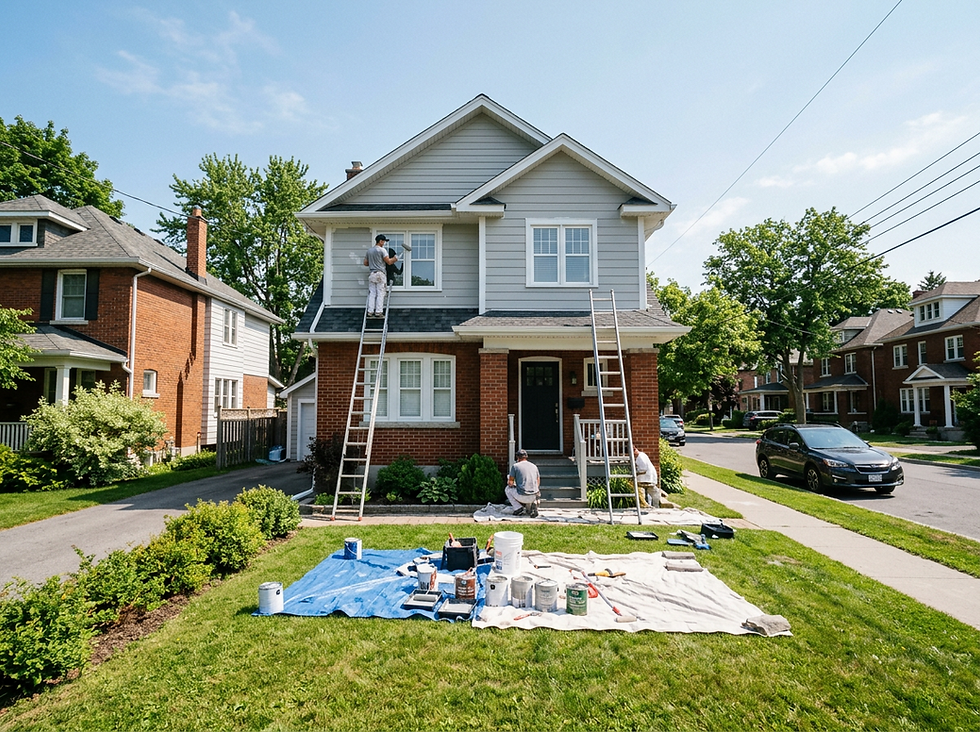
The process usually starts with a walkthrough. A painter checks wall condition, trim, ceiling height, repairs, access, moisture concerns, and surface type. For exterior work, they also look at peeling paint, caulking, wood rot, siding condition, and weather exposure.
This stage should clarify:
Which rooms or surfaces are included
What repairs are needed
Which paint products and finishes will be used
How furniture, floors, landscaping, and fixtures will be protected
How long the work is expected to take
What preparation is included
Clear scope prevents confusion later. It also helps compare quotes fairly, since one quote may include patching, sanding, caulking, and primer while another may not.
Preparation creates the foundation
Prep work may include moving furniture, covering floors, removing outlet covers, washing walls, scraping loose paint, sanding rough areas, patching holes, caulking gaps, and priming stains or bare surfaces.
For exterior painting, prep can include cleaning, scraping, sanding, spot priming, replacing failed caulking, and protecting gardens or walkways. Weather timing matters. Paint needs suitable temperature and drying conditions, especially in spring and fall.
Skipping prep can lead to peeling, uneven texture, and visible repairs. Proper prep takes time, but it is the difference between a quick cosmetic coat and a lasting finish.
Painting requires the right tools and steady technique
Professional painters choose brushes, rollers, sprayers, and paints based on the surface. Smooth drywall, textured ceilings, detailed trim, wood siding, and metal railings all require different handling.
Good technique includes maintaining a wet edge, applying even coats, allowing proper drying time, and using primer when needed. Dark colour changes, water stains, fresh drywall, and glossy surfaces often need special attention.
Final touches make the result feel complete
A careful finish includes removing tape cleanly, reinstalling covers, checking corners, touching up missed spots, cleaning edges, and reviewing the work in different light. Small details matter. A clean line where wall meets trim can make a room feel sharp and finished.
Before the project wraps up, many homeowners also keep labelled leftover paint for future touch-ups. A small amount stored properly can help fix scuffs later, especially in busy hallways and children’s rooms.

When it makes sense to hire a residential painter
Some small paint jobs are manageable for a careful homeowner. A simple bedroom with good walls and low ceilings may be a reasonable weekend project. Larger, more detailed, or high-visibility work is where professional help often pays off.
Hiring a painter makes sense when the project includes:
Tall stairwells or vaulted ceilings
Exterior ladders or hard-to-reach trim
Peeling paint or damaged surfaces
Stain blocking or major colour changes
Detailed trim, doors, or built-ins
Tight timelines before selling or moving
Multiple rooms that need consistent finish quality
Professional painters also bring speed. What takes a homeowner several weekends may take an experienced crew far less time, with less disruption and a cleaner setup.
A better paint project starts with better decisions
Residential painting is one of the most practical ways to improve a home’s appearance, comfort, and perceived value. In Ottawa, it also helps protect surfaces from a climate that can be tough on exterior materials and high-traffic interiors.
The best results come from thoughtful choices: colours that suit the home’s light and fixed finishes, products that match the surface, and preparation that gives paint something solid to bond to. Whether the goal is a brighter main floor, a more welcoming exterior, or a full-home refresh before listing, professional painting can make the change feel polished rather than temporary.
A beautiful finish begins before the paint can opens. Start with the surfaces, choose colours in real light, select the right sheen, and give preparation the attention it deserves. The result is a home that looks cared for from the curb and feels better every time the door opens.


Comments