
Safe and Stylish Entryway and Stairwell Painting Tips

Painting an entryway or stairwell can change how a whole home feels. These spaces are often the first thing people see, and a fresh colour can make them brighter, cleaner, and more welcoming. They can also be awkward to paint. Tall walls, narrow landings, railings, uneven stairs, and busy household traffic all add risk.
The good news is that a safe, polished result is very doable with the right plan. Choose safer products, set up solid ventilation, protect the space well, and use tools designed for height rather than improvising with a chair or overreaching from a ladder.

Start with safety before style
Entryways and stairwells are high-traffic areas, which means the work zone must be safe for the person painting and for anyone moving through the home. Before choosing a brush, think through how the job will happen from start to finish.
A safe painting setup starts with three basics:
Stable footing
Stairs are not level ground. Use tools made for stair work, not household furniture, boxes, or stacked items.
Clean air
Paint fumes can build up quickly in enclosed stairwells and front halls. Ventilation matters even when using lower-odour products.
Clear space
Shoes, bags, coats, décor, and small furniture can turn into tripping hazards once drop cloths and ladders are in place.
If the stairwell is very tall, narrow, or difficult to access, hiring a professional painter may be the safest choice. Some walls are simply too high to paint comfortably without proper platforms or scaffolding.
Choose paint that is safer to use indoors
Paint has come a long way, and many interior products are now easier to work with than older high-fume options. For an entryway or stairwell, look for low-VOC or zero-VOC interior paint. VOCs are volatile organic compounds, which can contribute to paint smell and indoor air concerns.
“Non-toxic” is a reassuring term, but labels can vary. Instead of relying on that phrase alone, read the can carefully. Look for:
Low-VOC or zero-VOC wording
Water-based latex or acrylic formulas for interior walls
Certifications or label claims from the manufacturer
Clear instructions for use, drying time, and ventilation
Low-odour paint still needs fresh air. Keep windows open when possible, use fans to move air outward, and take breaks. If anyone in the home is sensitive to smells, pregnant, elderly, young, or has breathing concerns, extra caution makes sense. Plan the project for a time when the area can stay aired out and lightly used.
For entryways and stairwells, durability also matters. These walls often see scuffs from backpacks, boots, pet leashes, moving boxes, and hands along the stairway. An eggshell or satin finish is often a practical choice because it offers a soft look while being easier to wipe than flat paint.
Prepare the space so the job stays neat
Good prep is not the glamorous part of painting, but it is what separates a crisp finish from a frustrating mess. Entryways collect dust, grit, and fingerprints, so start by cleaning the walls. Use a mild cleaner and let the surface dry fully before painting.
Remove what you can from the area:
Small tables
Coat racks
Umbrella stands
Shoe mats and trays
Wall art and mirrors
Switch plates and vent covers
For anything that cannot move, cover it with plastic sheeting or a clean drop cloth. Tape the covering in place so it does not slide while people walk nearby.
Floors need special attention. Canvas drop cloths work well because they are less slippery than thin plastic. On stairs, avoid loose fabric that can bunch underfoot. Tape drop cloths securely, or use stair-specific protective runners. If the entry has tile, hardwood, or vinyl plank flooring, run painter’s tape along the edges where the floor meets trim.
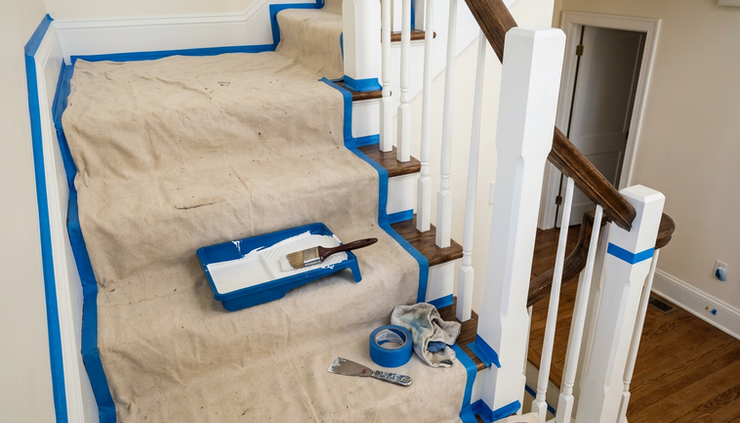
Take time to patch nail holes, dents, and scuffs. Stairwell lighting can cast shadows on walls, making bumps and old damage more visible after fresh paint goes on. Use spackle for small holes, sand smooth, and wipe away dust with a damp cloth or tack cloth.
If the walls are glossy, stained, patched, or changing from a dark colour to a light one, apply primer. Primer helps create a more even surface and can reduce the number of paint coats needed.
Pick the right tools for high and awkward areas
The biggest challenge in stairwell painting is reach. Stretching too far is unsafe and usually leads to uneven coverage. The right tools let you work from a stable position while keeping control of the paint.
Tool | Best use | Safety tip |
Extension pole | Rolling tall walls and upper corners | Keep both feet planted and avoid reaching sideways |
Angled brush | Cutting in around trim, ceiling lines, and railings | Use a comfortable size so your hand stays steady |
Adjustable stair ladder | Working on steps where a regular ladder will not sit level | Follow the manufacturer’s setup instructions closely |
Ladder leveler | Creating safer ladder contact on uneven surfaces | Use only with compatible ladders |
Work platform | Painting landings or sections above stairs | Make sure it is rated for the task and fully stable |
Mini roller | Tight spaces beside trim, railings, and corners | Use light pressure to avoid ridges |
An extension pole is one of the best investments for this type of project. It helps you roll higher sections without climbing as much. Choose one that locks firmly at different lengths, and pair it with a quality roller frame that does not wobble.
For very high stairwells, a basic step ladder may not be enough. An articulating ladder or stair ladder can be useful because it adjusts to uneven heights. Set it up slowly, check every lock, and never stand above the recommended step. If the ladder feels unstable, stop and change the setup.
A simple rule helps: if you need to lean hard to reach the wall, you are too far away. Move the ladder, adjust the pole, or use a safer platform.
Use a painting method that gives even coverage
Entryways and stairwells often have shifting light. A wall may look fine from one angle, then show roller marks from another. A steady method helps keep the finish even.
Start by cutting in. Use an angled brush along ceiling edges, baseboards, door frames, stair trim, and corners. Work in manageable sections so the brushed edges do not dry before you roll nearby areas.
Then roll the wall using overlapping strokes. Keep a wet edge as you move across the surface. This means each new pass of the roller slightly overlaps the previous wet paint, reducing visible lines.
A good approach is to work in sections about the width of your comfortable reach. Roll in a loose “W” shape, then fill in the area with vertical passes. Keep pressure light and consistent. Pressing harder does not improve coverage, it often leaves streaks and raised edges.
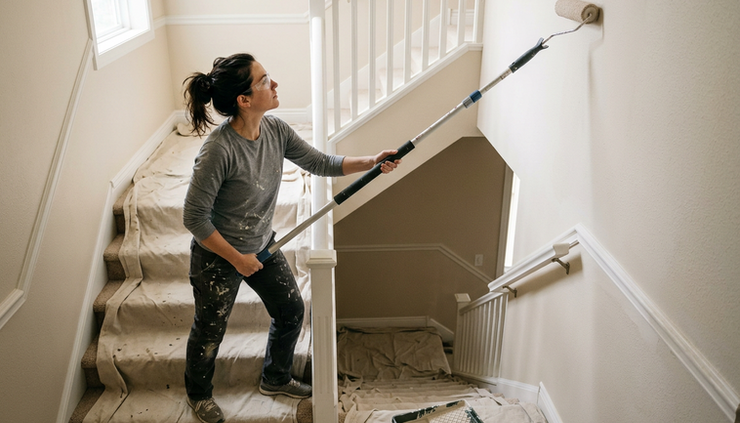
For stairwells, paint from top to bottom when possible. This helps catch drips and keeps your workflow cleaner. Check for runs near corners, trim, and the underside of handrails.
Plan for two coats in most cases. Even high-quality paint can dry unevenly after one coat, especially over patched areas or darker colours. Let the first coat dry according to the paint label before applying the second.
Keep the home ventilated while you work
Good ventilation makes painting more comfortable and helps the space dry properly. Entryways can be tricky because they connect to multiple rooms but may not have many windows.
Use a few simple tactics:
Open the front door if weather and security allow
Open nearby windows on different levels of the home
Place a fan so it pushes air toward an open window or door
Keep interior doors open to improve airflow
Take regular breaks away from the work area
Avoid pointing a strong fan directly at a freshly painted wall. It can dry the surface too quickly and may contribute to visible marks. The goal is steady air exchange, not blasting the wall.
In Canadian weather, ventilation can be harder during cold months. Even then, short periods of fresh air can help. Paint when temperatures are mild if possible, and follow the paint manufacturer’s guidance for indoor temperature and humidity.
Choose colours that improve light and space
Colour affects how an entryway and stairwell feel. These spaces can be narrow, shadowed, or cut off from natural light. The right paint colour can make them feel more open.
Light neutrals are popular for a reason. Warm white, soft greige, pale taupe, light grey, and gentle cream can brighten walls without feeling stark. If the trim is white, choose a wall colour with enough contrast to frame the space.
For darker entryways, avoid muddy colours that absorb too much light. A mid-tone can still work if the lighting is strong, but test it first. Paint a sample on a large piece of poster board or a peel-and-stick sample, then move it around the stairwell. Check it in morning light, evening light, and artificial light.
If you want personality, the entryway is a great place for colour. Consider:
A soft sage green for a calm feel
A muted blue for a fresh look
A warm clay or beige for coziness
A deeper accent on one landing wall if the space gets enough light
Ceiling colour can also change the feel of the space. A bright white ceiling often helps a stairwell feel taller. If the walls are very light, using the same colour on the ceiling can create a soft, seamless effect.
The best colour is not just the one that looks good on a paint chip. It should work with flooring, trim, railings, lighting, and nearby rooms.
Watch the small details that make the finish look professional
Once the main painting is done, the details matter. Remove painter’s tape before the paint becomes fully hard, unless the tape instructions say otherwise. Pull slowly at an angle to help create a clean line.
Inspect the walls from multiple viewpoints. Look down from the top of the stairs, up from the entry, and across landings. Stairwells reveal missed spots in surprising ways because the sightlines are long.
Keep a small brush handy for touch-ups around:
Door trim
Baseboards
Handrail brackets
Corners
Light switches
Scuffed stair edges
Let the paint cure before scrubbing or leaning items against the wall. Paint may feel dry to the touch before it reaches full hardness. During that time, be gentle with the area.
Know when to call in help
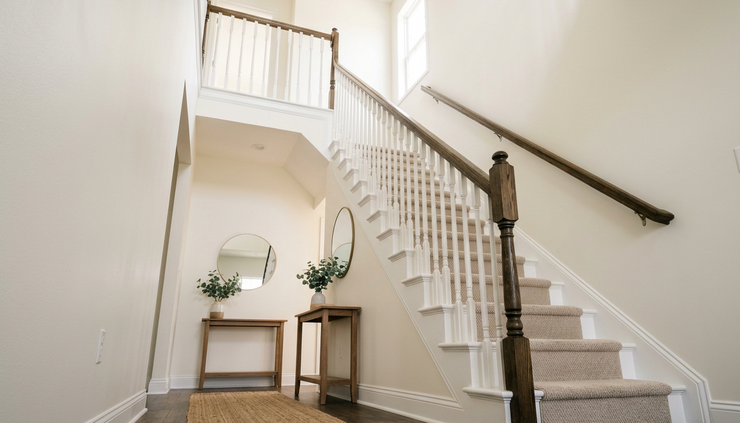
Many entryways are manageable as a careful weekend project. Some stairwells are not. If the wall height is beyond comfortable reach, if the stairs are steep or narrow, or if ladder placement feels uncertain, professional help is the safer route.
A painter with the right ladders, platforms, and experience can often finish the job faster and with less risk. This is especially true for open-to-above foyers, curved staircases, and stairwells with high ceiling lines.
There is no prize for doing a dangerous paint job alone. A safe result is always better than a rushed one.
A safer path to a better first impression
A freshly painted entryway or stairwell can make a home feel brighter the moment the door opens. The key is to treat the project as both a design update and a safety task.
Choose low-VOC or zero-VOC paint, ventilate well, protect floors and furniture, and use proper tools for high areas. Take time with prep, keep your footing stable, and apply paint in steady, overlapping sections for smooth coverage.
With the right plan, Safe and Stylish Entryway and Stairwell Painting Tips are not just about avoiding mistakes. They are about creating a space that feels clean, welcoming, and finished every time someone walks through the door.
Ready to give your entryway and stairwell a fresh look?
From interior and exterior painting to kitchen cabinet refinishing, Axcell Painting helps Ottawa homeowners get a finish they’ll love. With over 25 years of experience, we stand behind our work.


Comments